
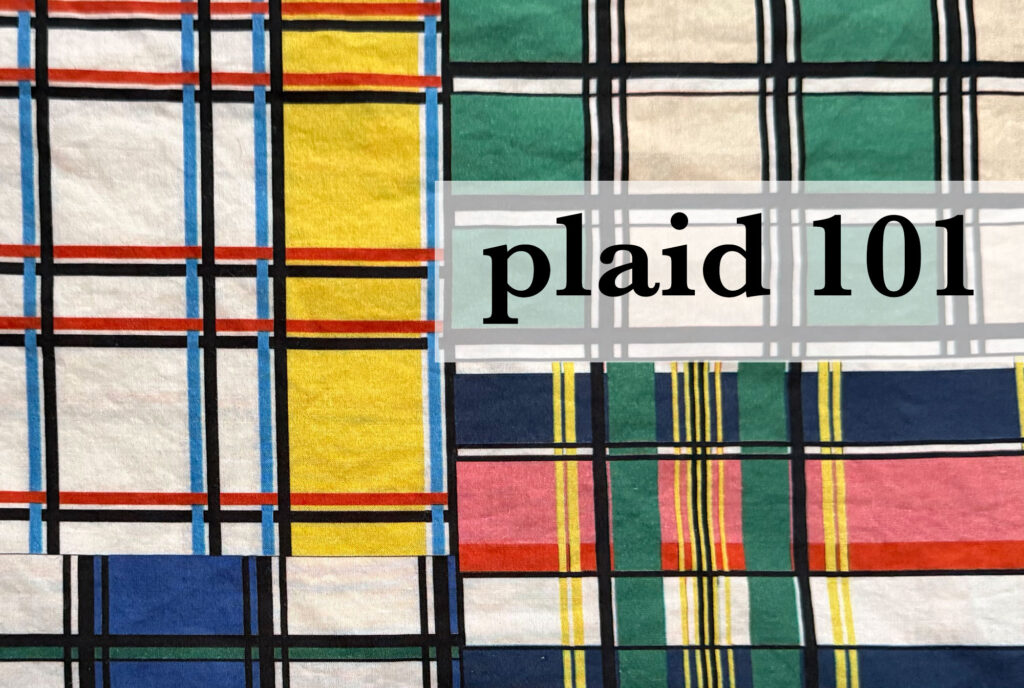
Plaid is not one particular design. It is in the geometric design family because of its intersecting stripes (usually at right angles). The plaid pattern is achieved by warping the loom (the lengthwise grain of the fabric) and weaving it (the crossgrain of the fabric) with bands of different colored yarns.
The color bands can vary in width and color, or be uniform with only two alternating colors equal in width and distance apart. What colors are used, how many colors, how often, and which colors repeat, and in which direction they are woven changes the design. And then there is the weave itself. Is it a plain weave or a twill weave? Is the twill weave 2:2 or 4:4 or something else? As you can see, the variation in plaid designs is possibly endless, giving this design family its huge range of patterns and personality.
But let me clear up some terminology now. Americans use the word “plaid,” as I am doing here, to describe this geometric, woven design. The word “plaid” that we use is the Scottish word for blanket. It is the tartan cloth worn over the shoulder in traditional Scottish dress, which was, when needed, used as a blanket. (You’ve seen the movie Rob Roy, right?)
A Little History
But the Scots did not invent plaid. It’s hard to give that discovery to any one culture because if you have ever woven cloth, you can see how natural it would be to add other yarns for a little interest. You just have to have access to dyes, or other fibers, and then, bam! plaids galore!
The earliest plaid cloth found, a checked cloth, dates back to 3000 BCE in China. Plaid cloth left behind in central Europe by the ancient Celtic tribes dates to around 1000 BCE. And in India, Madras plaids were woven as early as the 12th century.
Woven, Printed, Modern, Traditional, Symmetrical, Asymmetrical…What?
When dyed yarns are woven into a plaid, they will create a unique third color where the bands intersect. For example, where a lengthwise blue band crosses over a cross-grain yellow band, a green hue will result.
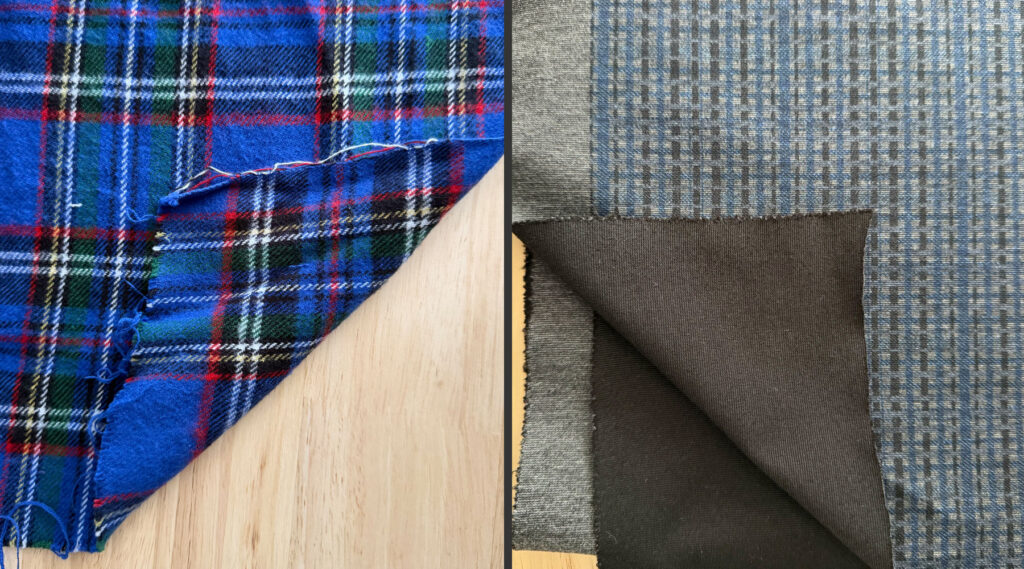
Printed plaid designs will typically print a different color where bands intersect or print alternating diagonal lines of the two colors that are meeting to represent the woven look. The result is slightly lackluster. Why imitate something that cannot be done in the medium one is using? Better to go off and do something that highlights the medium but that maybe gives a nod to the traditional process. But that’s another category of geometric designs.
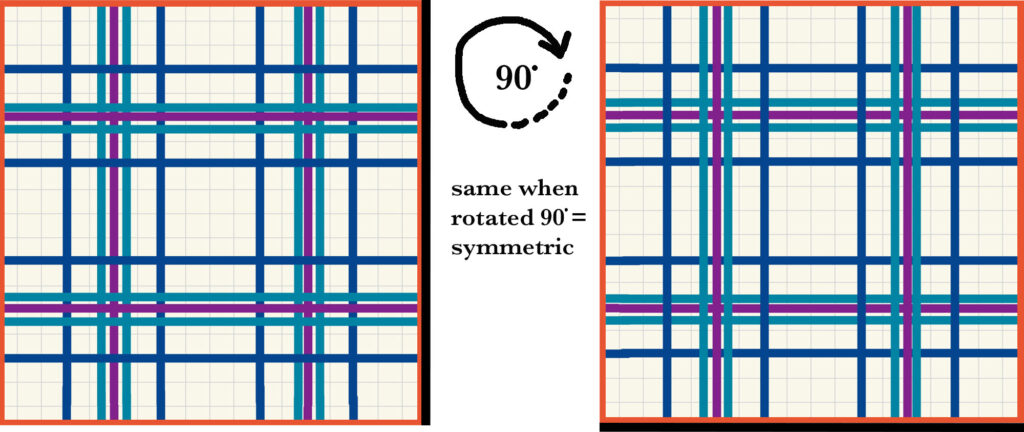
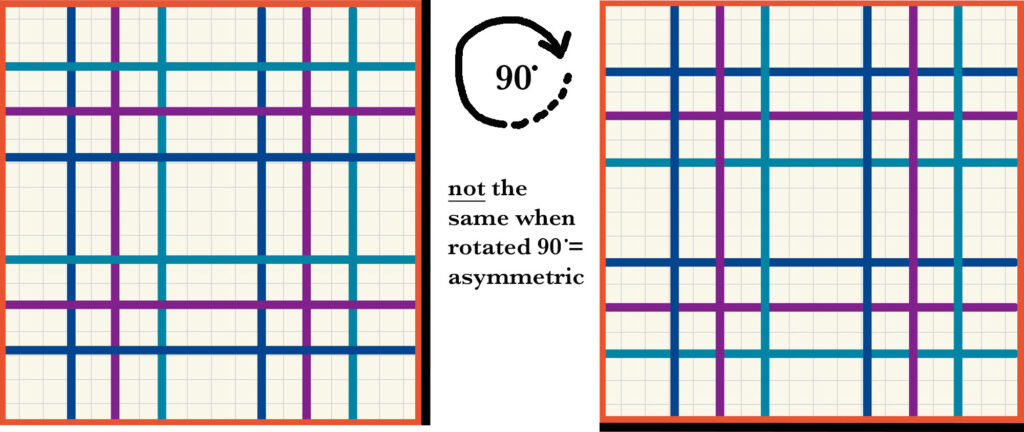
Traditional plaids are woven and symmetrical. The weaving results in a cloth that is the same on the front and the back. The bands of color are mirrored images of each other lengthwise and crosswise. These plaids have a strict pattern, scale, and cultural history. The Scottish tartans are even registered.
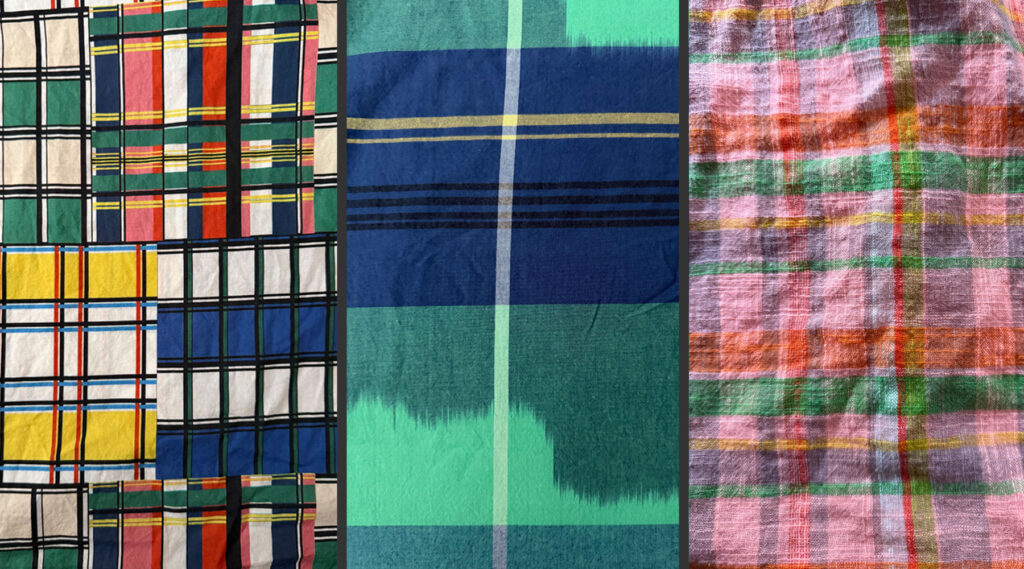
Modern plaids are not always woven; they may be printed onto one side of the cloth. The scale can be oversized or shrunken. The design can be asymmetric, meaning the bands of colors are not mirrored. Modern plaids can be explorative, encompassing texture, pattern breaks, and non-traditional colors like neon.
Meet the Plaid Design Family
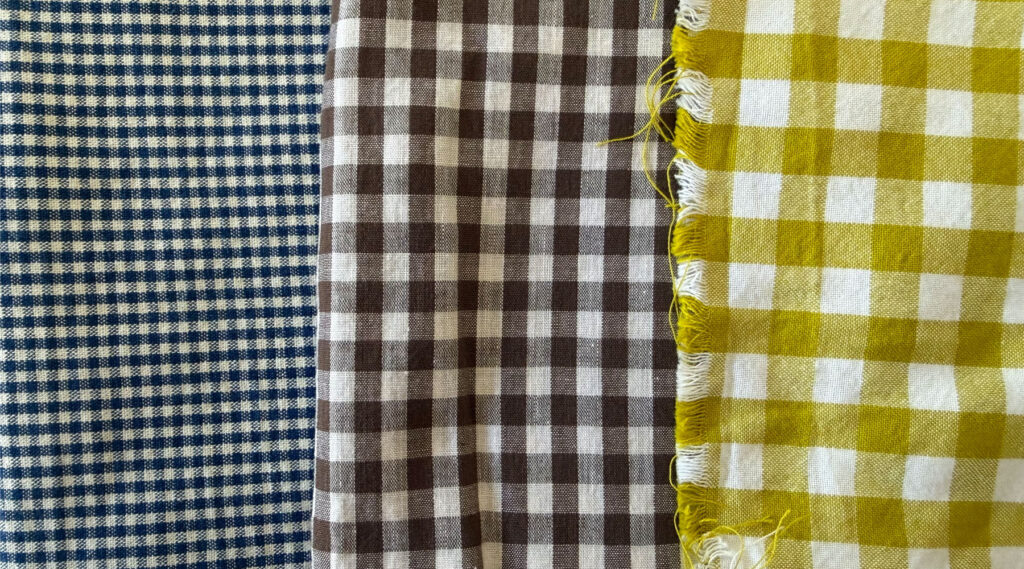
Checks or ginghams:
Woven with even bands of two alternating colors, usually one dyed yarn and one natural light yarn. The bands are even on the warp and the weft. Where they cross, it creates a third color: a blend of the two yarns.
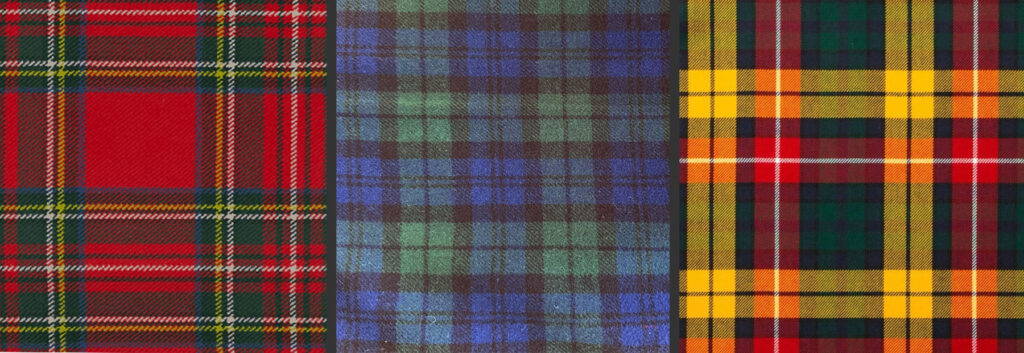
Tartans:
As has been written many times, “all tartans are plaids, but not all plaids are tartans.”
Americans have the habit of calling any tartan-like plaid a tartan, but a Tartan is linked to a particular Scottish Clan and is registered with the Scottish Register of Tartans. It’s like a family’s coat of arms. A tartan has cultural significance and a history. A plaid may look like a tartan, but it must have the pedigree and cultural significance to be a tartan. That said, new Tartans are designed and registered if they meet certain criteria. In fact, Vivienne Westwood designed and registered a tartan in 1993, named MacAndreas after her husband and design partner, Andreas Kronthaler.
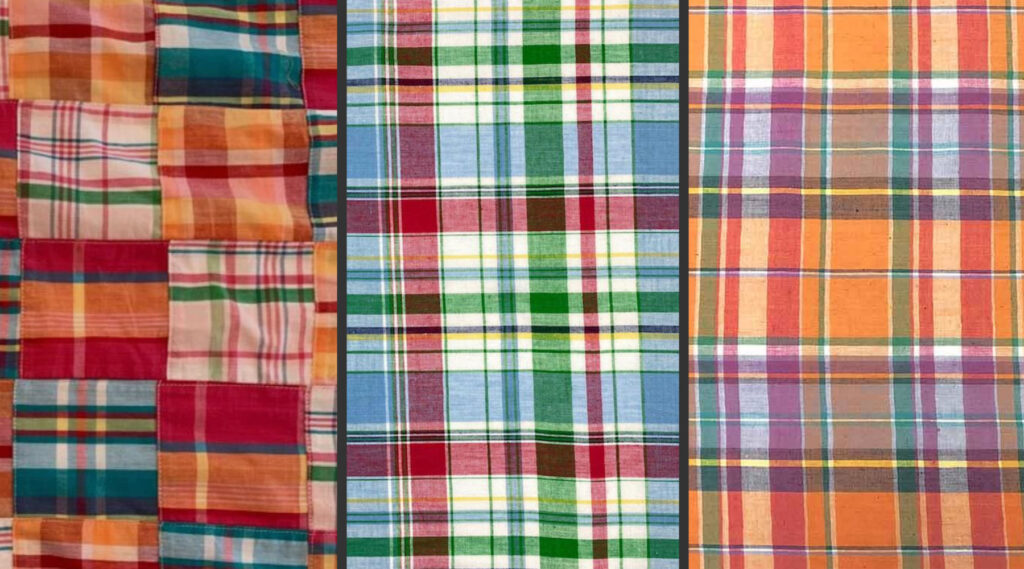
Madras:
Madras is a woven plaid made from dyed short-staple cotton fibers. Because short-staple cotton fibers are more fragile than long-staple cotton, slubs appear in madras cottons. In America, Madras plaid is linked to the Old Money look, and all that goes with it: Ivy League schools, country clubs, and Brooks Brothers. Its lightweight and typically bright colors make it a no-brainer for summer garments.
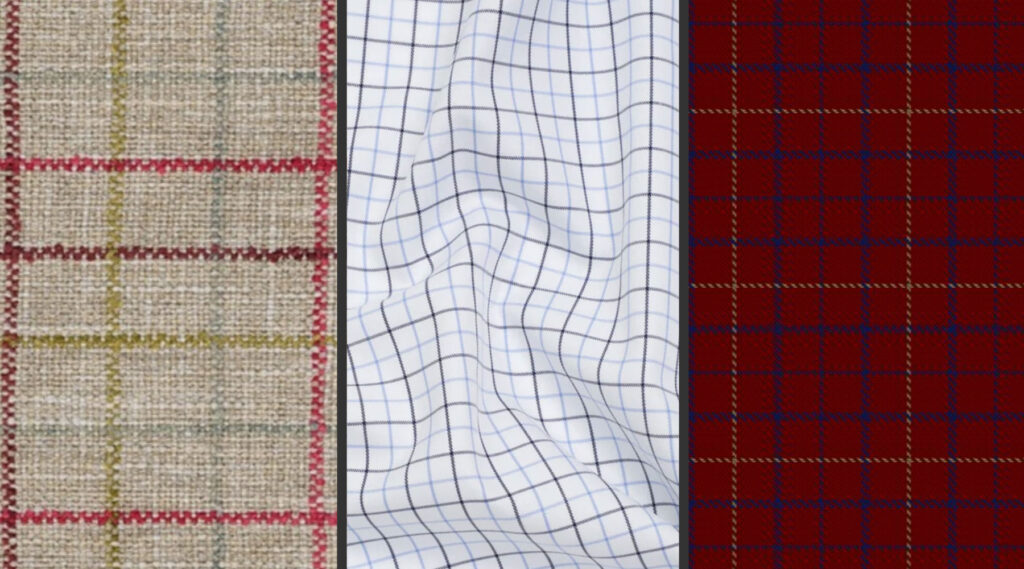
Tattersall:
Tattersall looks like a miniature window pane plaid. It is typically woven with two or more darker-colored yarns on a light ground. The bands of color are equally thick, but never very thick.
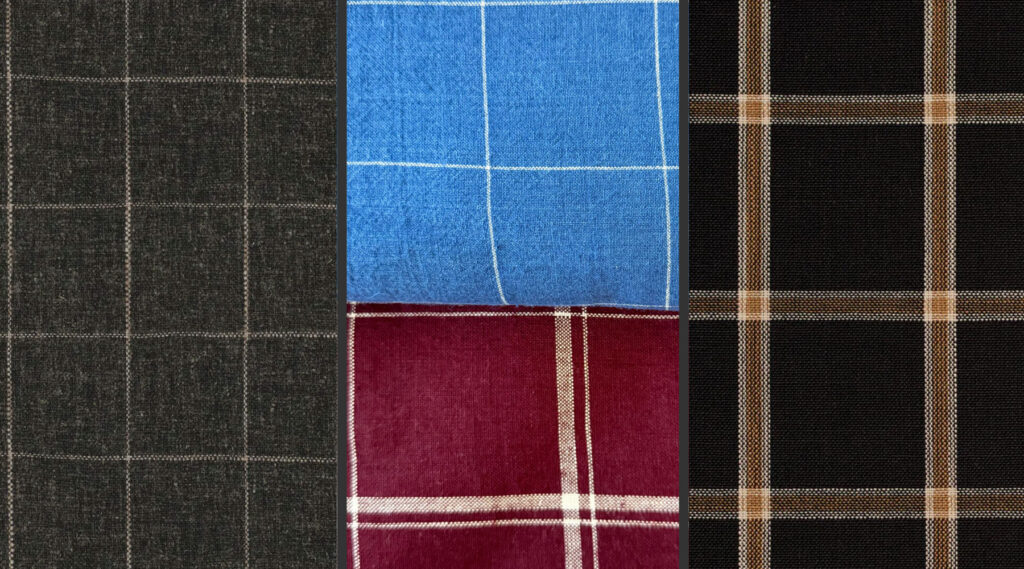
Windowpane:
The Windowpane plaid is made from one color band intersecting at evenly spaced intervals. The lines are also spaced inches apart, giving this plaid a larger scale than many. There is usually only one band of color crisscrossing the field. Sometimes a second line in the same color or in a second color will be placed to one side of the main band. Adding a second band changes the plaid from symmetrical to asymmetrical.
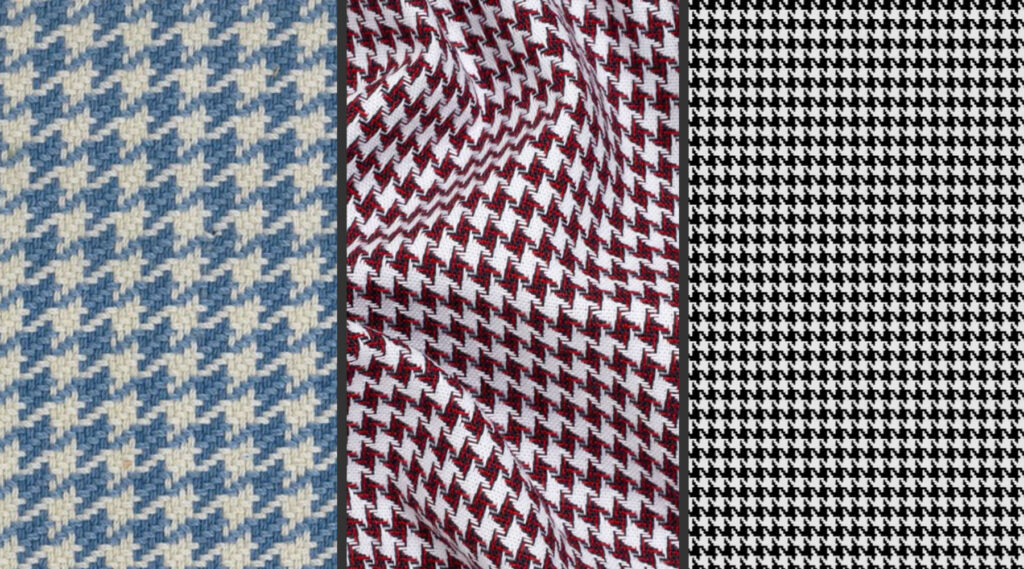
Houndstooth:
Houndstooth can be large or small in scale. It is made from two contrasting colors (although the center sample in the photo above has a third color yarn). Houndstooth is similar to gingham in the color scheme and band width and repetition. What makes it a houndstooth, though, is the weave. Where the gingham is a plain weave, the houndstooth is a two-over, two-under twill. Typically, this twill is a right-leaning twill. It is the twill weave that creates the jagged, four-pointed shape of each check. And it is the jagged shape that gives this plaid its name – it looks like a canine tooth.
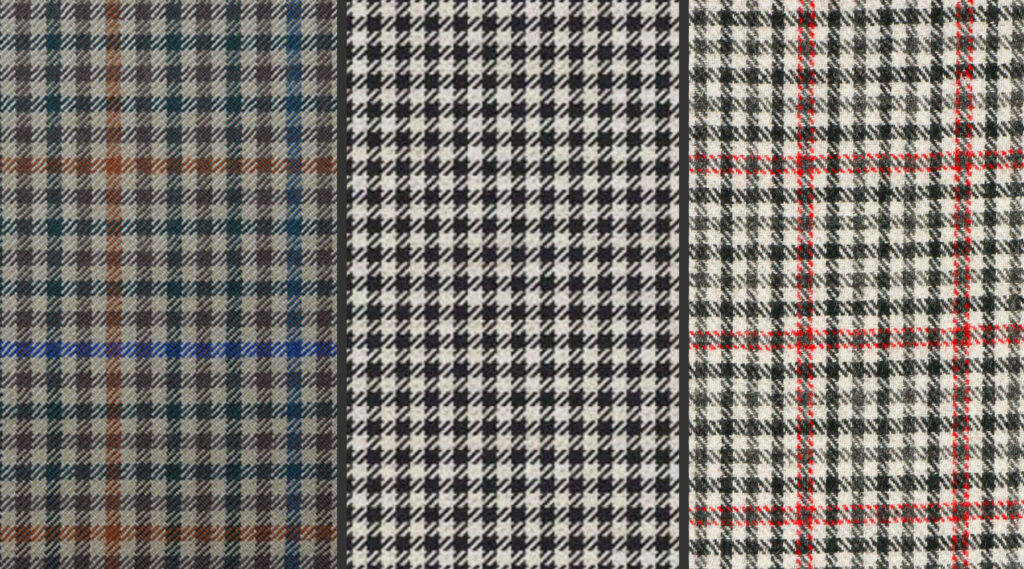
Shepherd’s Check:
Shepherd’s Check closely resembles a small-scale gingham, typically 1/4″ wide bands, and a houndstooth. Again, the gingham’s even spacing and color(s) on a light ground. And like the houndstooth, it is woven in a right-leaning twill pattern. The shepherd’s check will show diagonal lines of the ground and intersecting color where they intersect each other instead of blending to make a third block of color.
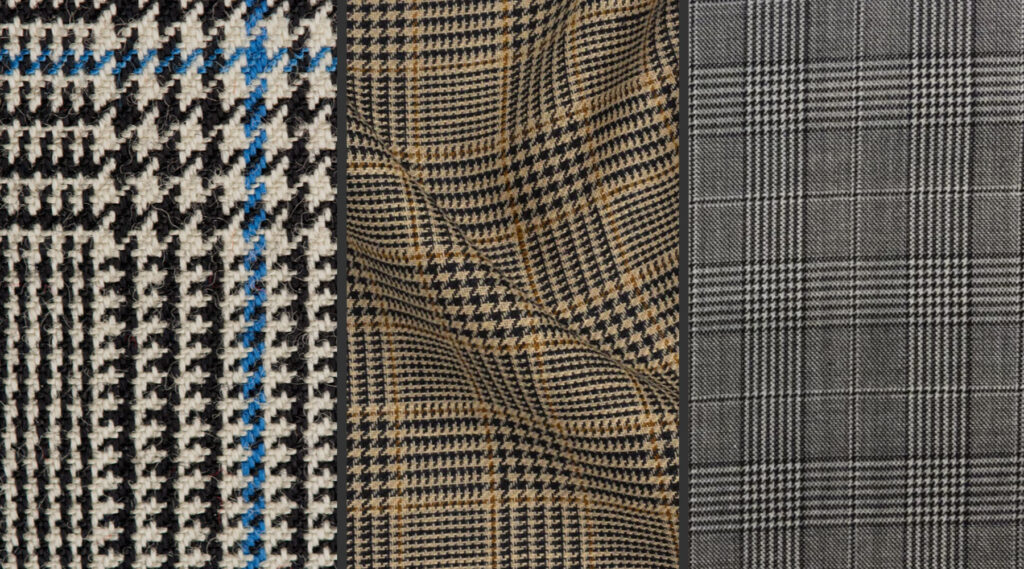
Glen Plaid: (aka Prince of Wales check)
The Glen Plaid is a blend (to my eye) of plaid and houndstooth. The alternating stripes in two contrasting colors go from thin, thin, thin, to thick, thick, thick. They intersect each other in a regular pattern, but the cloth is woven with a right-hand twill weave. The twill weave forms a miniature houndstooth within the plaid.
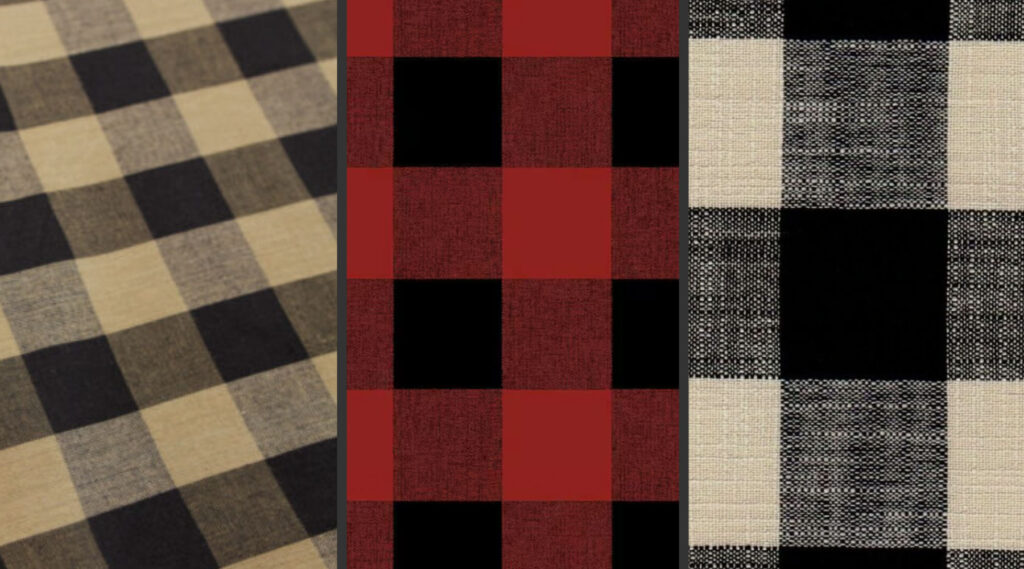
Buffalo Plaid
You might think of Buffalo Plaid as a giant gingham but with a black, not white, ground. You probably think of Paul Bunyan of lumberjack lore too (or of the Brawny paper towel man) when you see an iconic red and black woolen buffalo plaid. This pattern became popular in North America in the 1850’s when Woolrich started using the Rob Roy MacGregor tartan for their high-visibility outdoor work and hunting wear. It eventually was used for everyday wear and is now widely used in winter holiday decor.
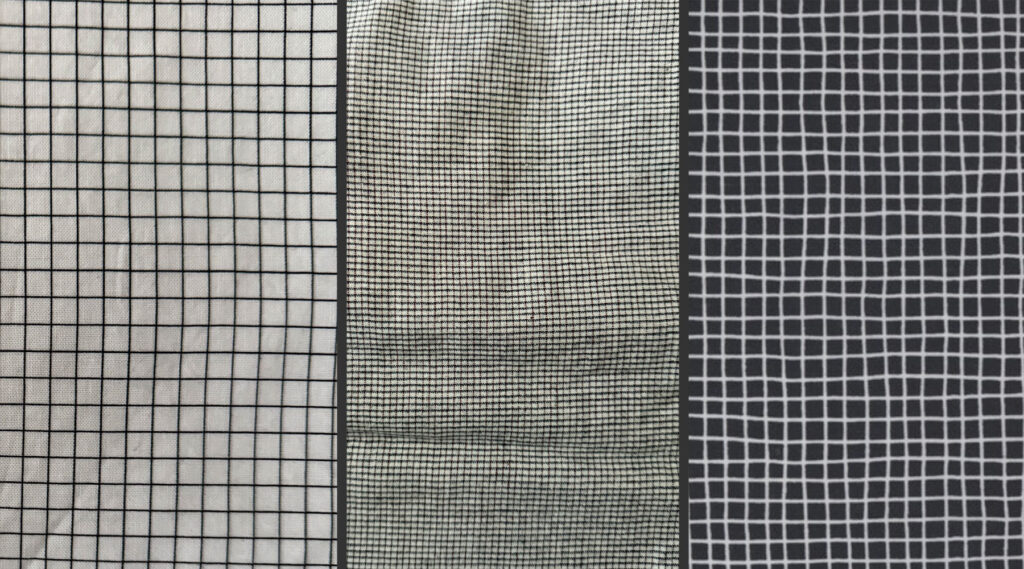
Grid Pattern
The grid pattern is one thin color band woven at equal distances apart in both directions. It is similar to a Tattersall. Many modern grid fabrics are printed and not woven. The printing process allows for the “hand-drawn” look of some grids.